Humble Indie Bundle 2

In case you haven’t heard yet, the second ever humble indie bundle is out!
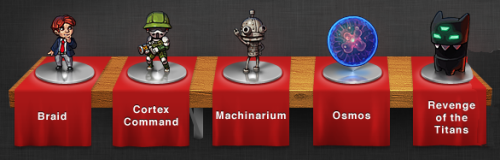
Games in the bundle:

  1. Braid (which I highly recommend)
  2. Machinarium (which I was planning to get anyway)
  3. Cortex Command
  4. Osmos
  5. Revenge of the Titans

Pay whatever you want, and choose how much of it goes to which charity (including the games’ developers, EFF and child’s play)!

www.humblebundle.com/

P.S. For those of us who bought the original Humble Indie Bundle last year, they just released it on steam too, so you can download the games from there, etc.

Writing Fiction: Outliner or Discovery Writer?

Some fiction writers work better by just jumping in and starting writing, no planning. They’re often called discovery writers (good podcast about DW).

Some writers produce better stuff when they plan and outline and world-build a lot. They’re sometimes called outliners.

Everyone is different, but most people can probably improve their writing by using a bit of both. For example, my own fiction writing happens something like this:

My process

  1. My stories start as simple concepts in my imagination. For example,
    • a girl who can see through other people’s eyes, or
    • a ghost trying to save a living friend in peril.

    Some come from dreams.

  2. If one strikes me as interesting, I try to build on the characters and setting around it and come up with a basic story (still all just in my head, so far). For example,
    • Who is the girl? What kind of person is she? What is her situation?
    • How can she see through other people’s eyes – what kind of magic or technology, and how does it work?
    • Why is it important? Who does it hurt/help? What situations does it lead to?
  3. If I create something I like, I decide to start capturing it (on paper or a computer file). I start a written outline consisting of info like:
    • Plot summary (a paragraph)
    • Characters (3-5 bullet points about them)
    • Setting
    • Major scenes (a short paragraph for each)
    • Etc
  4. In this way, I construct the plot, setting and characters until I can see one or two key scenes really coming together in my head.
  5. At that point I make myself stop outlining and actually write some of those key scenes to “flesh them out”
  6. Getting the whole scene written down helps me learn a lot about my plot, and characters. I see some problems and have some good ideas. So I go back and revise my outline.
  7. I do the opposite, too – after writing a few more scenes out, I return to the outline to see if I like the direction I’m going. I fiddle with the outline to improve a few things, then use that to chop and change the written scenes

So I recommend trying both together and seeing what works best for you.

Potential problems

Avoid:

  1. Outlining too much and never getting started with the actual writing (the Writing Excuses guys call this “World-Builder’s disease”)
  2. Jumping in with no planning and writing thousands of words into a story that never goes anywhere or ends abruptly/unsatisfyingly

Braid

As usual, I’m behind on this one, but: if you haven’t yet played Braid, please do.

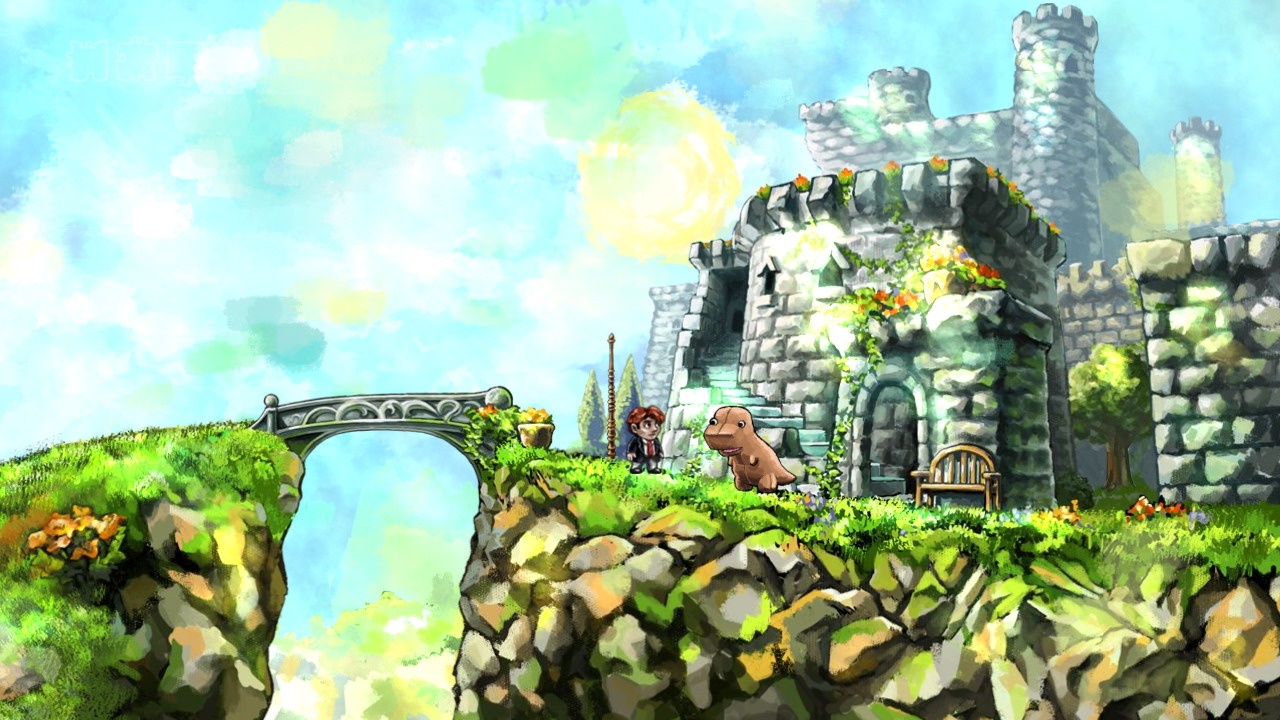
For one, it’s pretty:

… with a unique art style something like a swirling, living painting.

It also has a mysterious, multi-layered story with genuinely interesting themes.

But the best part is the gameplay. It leads you in a perfect difficulty curve from simple platforming to absolutely mind-bending puzzles. Many of the solutions were so far outside-the-box that I felt like my brain was stretching; like the game was actually teaching me to think more creatively.

You don’t need a new PC with a fancy graphics card – an oldish pc will do; you can get it from steam for less than $10, (or get the free demo first, or wait for it to go even cheaper during a sale – there’ll probably be a steam sale or two around Christmas). It’s also on Mac (through steam), XBOX 360 and PS3.

One warning though: don’t use a walk-through if you get stuck. I did use some non-spoiler hints I found, towards the end when I was really stumped. But use them sparingly, if at all; the satisfaction of solving it yourself is worth it.

Another Booktopia free shipping code

[Update: code below now expired]

I got another free shipping code for Booktopia (see previous post) if anyone’s interested:

CHRISTMAS

It expires midnight on Sunday 28th November, 2010 (AEST).

Disclaimer: Just FYI, not a paid endorsement, etc

Writing Excuses

Writing Excuses is a short podcast (tagline: “15 minutes long, because you’re in a hurry, and we’re not that smart!”) about writing fiction, with a focus on spec fiction (sci-fi and fantasy, though much of it applies to other kinds of fiction and other kinds of writing). The 3 hosts are Brandon Sanderson, Howard Taylor, and Dan Wells.

I started listening because it had Brandon on it, but the fun, brief episodes were so interesting and encouraging that I’ve continued. In fact partly because of the podcast, I’ve actually become a writer now. I’ve started working on my own fiction for the first time since childhood.

Recommended episodes to try:

Exposition (with Patrick Rothfuss)

Magic systems and their rules

Lessons from puppetry (with Mary Robinette Kowal)

Another Booktopia free shipping code

(Note: coupon code below has expired)

I just did some Christmas shopping at Booktopia. Supported some authors I like and saved some money.

I got another one of those free shipping codes – you are welcome to use it, but it expires Monday:

Simply place an order before midnight on Monday 8th November, 2010 (AEST) with the promotion code below and you will receive free shipping on your order. The promotion code can be used as many times as you, or your family and friends, want on any orders between now and then.

Type the word SUPERB in the promotion code field when you checkout. (Codes are entered with your payment options at the end of the checkout process, make sure you click the word “Apply” next to the field to apply the discount).
Disclaimer: not a paid endorsement, just FYI, etc